Do You Actually Have Enough People to Win? Do the Math Before You Do the March
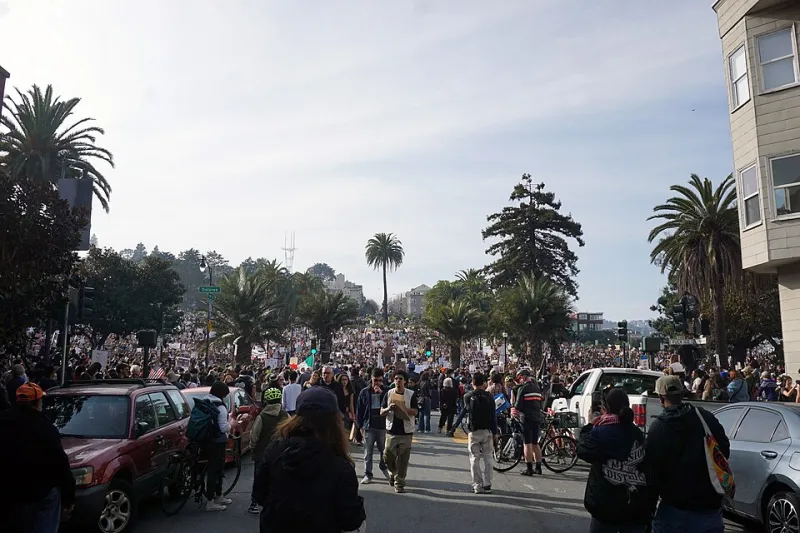
Photo: E mln e, CC BY-SA 4.0, via Wikimedia Commons
Here's a question most volunteers never ask: what does winning actually cost, in humans?
We ask whether a cause is just. We ask whether we care. We almost never ask whether the movement has — or could plausibly recruit — enough people power to change the outcome. And that's a shame, because the math is more knowable than you'd think, and it can save you from pouring two years of Saturdays into a fight that was never winnable at that level. Or, better, it can show you that the fight you dismissed as hopeless only needs 400 people.
The Core Equation
Every campaign, from a crosswalk petition to a federal bill, runs on a version of the same equation:
Decision-makers who must say yes → votes or pressure each one needs to feel → contacts required per vote → supporters needed to generate those contacts.
That chain is your calculator. Let's run it at three levels.
Local: The Smallest Numbers, the Fastest Wins
A city council seat in a typical American municipality might be decided by 2,000–5,000 votes. A school board race can turn on fewer than 1,000.
But you don't need to persuade that many people — you need to turn out people who already lean your way. Field research consistently suggests it takes roughly 10–15 real voter contacts (doors, calls, texts with an actual reply) to produce one additional vote. So flipping a 1,200-vote school board race looks like this:
- 1,200 votes needed
- × 12 contacts per vote
- = ~14,400 contacts
- With a volunteer texting or door-knocking 40 contacts per shift, that's ~360 volunteer shifts — very doable for a team of 20–30 people over ten weeks.
Read that again: a few dozen committed people can decide who runs your kid's school. This is why off-year local elections are the best return on activist energy in American politics.
State: Where the Funnel Gets Brutal
A state legislative district might hold 40,000–60,000 voters, with competitive races decided by 2,000–8,000 votes. The contact math scales the same way — but your volunteer pool doesn't scale automatically. You're now recruiting, training, and retaining people across multiple towns.
The realistic threshold: a state-level campaign needs a core of several hundred recurring volunteers and an email/SMS list in the tens of thousands. If the existing coalition behind your cause can't produce that, the honest move is to pick one winnable district and concentrate, rather than spreading across 30 races you'll lose narrowly.
National: The 3.5% Reality Check
Harvard researcher Erica Chenoweth's famous finding — that no campaign in the modern era succeeded with less than about 3.5% of the population actively participating — gets quoted a lot and understood rarely. In the US, 3.5% is over 11 million people. That's the bar for toppling a national regime through mass mobilization.
But most national causes don't need regime toppling; they need Congress to pass a bill. That runs on a different metric: sustained constituent pressure. Congressional offices report that a few dozen personalized contacts on one issue in a week gets flagged; several hundred gets a meeting; consistent volume across multiple offices shifts what's politically possible. National campaigns are won by thousands of local campaigns running the local math simultaneously — not by one giant march, however good the signs are.
Your 10-Minute Sizing Exercise
Before committing to any cause, grab a napkin:
- Name the decision-maker. A council, a board, a legislator, an agency. If you can't, stop here — you don't have a campaign yet.
- Count the votes or the pressure points. How many council seats? How many co-sponsors short is the bill?
- Multiply by 12. Rough contacts-per-vote (or per firm yes) conversion.
- Divide by realistic volunteer capacity. 40 contacts per shift, honest answer about how many people will actually show up repeatedly.
- Ask the brutal question: Does the existing community — not the internet, the community — plausibly produce that many shifts?
If yes: commit your weekends. If no: shrink the arena. Same cause, smaller jurisdiction — the school district instead of the state, one legislator instead of the whole Congress.
The march felt like the beginning. The math is the beginning. Run it first, then bring the signs.