Try Before You Organize: The Sneaky Psychology of the Gateway Action
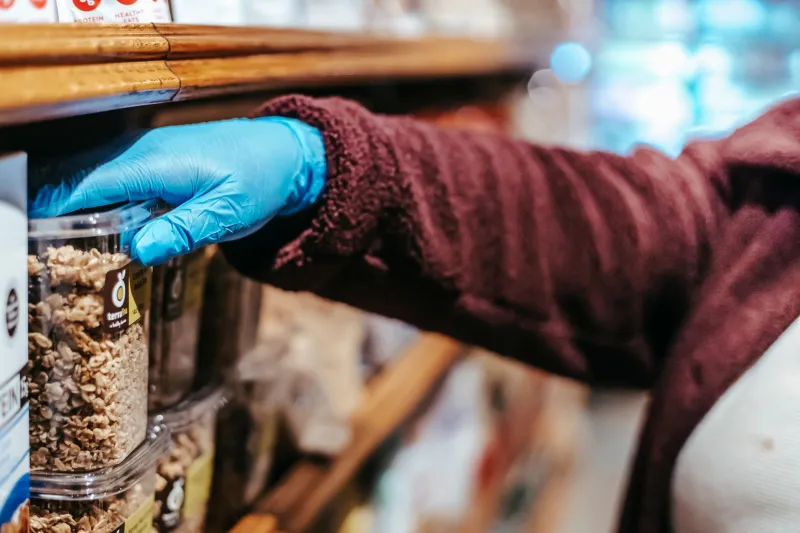
You've done it. We've all done it. You walk into Costco for paper towels and leave having eaten a miniature quiche off a toothpick, and somehow now you own a 96-pack of something. That free sample didn't just taste good — it did something to your brain.
Behavioral scientists have a name for what happened: the foot-in-the-door effect. Once you've said yes to something tiny, your brain quietly updates your self-image. You're now the kind of person who says yes. And people who say yes to toothpick quiches are shockingly likely to say yes to the full-size version.
Organizing works the same way. And if your campaign isn't offering a sample, you're asking strangers to buy the 96-pack cold.
The First Click Is the Expensive One
Here's the uncomfortable math of activism: the hardest action to get someone to take is always the first one. Not the 40th phone bank shift. The first two minutes.
Researchers call this friction cost, and it explains why a petition with a one-field form outperforms a beautiful manifesto with a donation page attached. Every additional click, scroll, or decision point is a chance for a stranger to remember they were busy.
The gateway action — that small, low-stakes first task — works because it solves three problems at once:
- It lowers the stakes. Nobody fears a test email. People absolutely fear committing their Saturday to strangers.
- It builds identity. Completing even a trivial task makes someone think of themselves as involved, not just interested.
- It creates a data point. You now know this person does things. That's worth more than 500 passive followers.
Dr. Priya Raman, a community organizer turned researcher we spoke with in Columbus, put it bluntly: "I stopped trying to recruit volunteers. I started trying to get people to do one ridiculously easy thing. The recruitment took care of itself."
What a Good Sample Tastes Like
Not all gateway actions are created equal. After reviewing campaigns across housing justice, school board fights, and climate organizing, a pattern emerges. The best first offers share four traits:
- Under 10 minutes. If it can't be finished before someone's coffee gets cold, shrink it.
- Visible impact. A test email they actually see sent, a sign they actually hold. Abstractions don't build identity.
- Zero commitment on the back end. No auto-subscription to a weekly guilt newsletter. The sample is free, remember?
- A soft next step. One line at the end: "Want to do one more?" Not five. One.
A tenant organizing group in Kansas City we interviewed swapped its intake form — a 20-minute monster — for a single-click action: "Text this message to your landlord council rep." Completion jumped. So did follow-through, because people who text a real person with a real name were suddenly curious about the campaign.
That curiosity is the actual product. The quiche is just the delivery mechanism.
If You're the One Holding the Toothpick
Maybe you're not running a campaign. Maybe you're the stranger, wondering how to get involved with a cause that's been eating at you. The same psychology applies in reverse: don't try to be a hero on day one. Pick your sample wisely.
- Choose actions with a receipt. Did the email send? Did the form submit? If you can't see the result, your brain won't register the win.
- Sample before you subscribe. Take three different groups' easy actions before committing to any of them. Notice which one made you want a second bite.
- Watch for the identity shift. At some point you'll catch yourself saying "we" about a campaign. That's the moment you've stopped sampling. Lean in.
The people who burn out fastest in activism are usually the ones who skipped the sample aisle entirely — who went from bystander to board member in a weekend and had no idea what they'd signed up for.
Design Your Own irresistible First Offer
If you're building a campaign, run your gateway action through this five-question filter:
- Can a stranger finish it on a phone, standing in line?
- Does it produce something real they can see?
- Does it require zero prior knowledge of the issue?
- Is there exactly one follow-up ask, not a funnel?
- Would you do it if you didn't already care?
That last question is the killer. Most organizers design first actions for people who already agree with them. Your sample has to work on the person who's still deciding — the one pushing the cart past your table.
Small Bites, Long Table
There's a reason Costco doesn't hand you the pallet on the way in. It lets you taste first. Activism that lasts — the kind that fills school board meetings and flips city councils — is built on millions of tiny yeses, stacked carefully on top of each other.
So design the toothpick. Take the toothpick. Then, when someone asks how you got so involved, you'll honestly have no idea where the quiche ended and you began.
That's the point.