The Election That Actually Runs Your Life Is Probably Next Tuesday — Here's How to Show Up in 30 Minutes
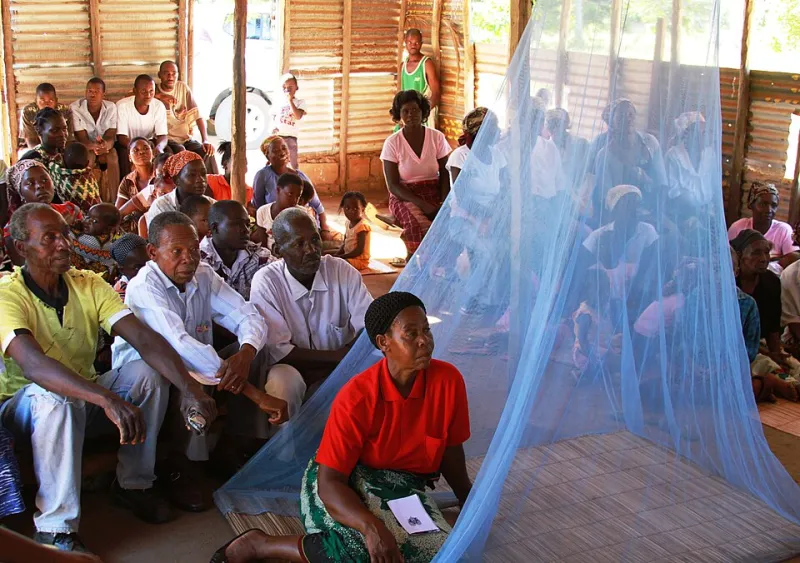
Photo: President's Malaria Initiative, Public domain, via Wikimedia Commons
Let's be real for a second. You probably know the name of both US Senators from your state. You might even know your House rep. But do you know who sits on your city council? Who's on your school board? Who controls your county's zoning decisions?
If the answer is "no" or "sort of" — you're not alone, and you're not a bad person. But you are leaving an enormous amount of power on the table. Because here's the uncomfortable truth about American democracy: the government that shapes your actual daily life most directly is probably the one you're paying the least attention to.
Let's fix that. Right now. Today.
The Federal Government Sets the Stage — Local Government Runs the Show
Think about the last time a political decision directly affected your life. Not in a vague, abstract, "the economy" kind of way — but in a concrete, tangible way.
Was it a federal law? Or was it something like:
- Your rent going up because your city approved a luxury development instead of affordable housing
- A new highway project cutting through your neighborhood
- Your kid's school losing arts funding because the school board voted to reallocate the budget
- A local ordinance that restricted a protest route
- A zoning change that let a polluting facility open two miles from your house
All of that is local government. City councils. County commissioners. School boards. Zoning boards. Water districts. These bodies make decisions every single month that touch your life more directly than most things Congress does in a year — and they do it in front of audiences that sometimes number in the single digits.
Federal legislation is important. Nobody's saying it isn't. But the pipeline from congressional action to your front door runs through a dozen layers of local implementation. Local officials decide how federal housing dollars get spent. Local prosecutors decide which laws get enforced and how. Local planning commissions decide what your neighborhood looks like in ten years.
The Margins Are Tiny — And That's the Point
Here's the number that should make every activist's eyes light up: in a typical off-cycle local election, turnout can be as low as 5-15% of registered voters. City council races in mid-sized American cities are regularly decided by a few hundred votes. School board races have been flipped by fewer than fifty.
Fifty votes.
In a presidential election, you are one of tens of millions. Your individual impact is real but diffuse. In a local race, you are one of a few thousand — or a few hundred. The math is completely different. The leverage is completely different.
This is why well-funded interests pour money into local races that look boring from the outside. They know what the turnout numbers look like. They know that a small, organized group can dominate a low-turnout election. The question is whether that organized group is going to be them, or you.
Finding the Races That Actually Move the Needle
Not every local race is equally winnable or equally impactful. Here's a quick framework for figuring out where your 30 minutes will do the most good.
Step 1: Find your local election calendar. Your county clerk or board of elections website will have this. Search "[your county] election calendar 2025" and bookmark it. Most states hold local elections in odd years — 2025 is a big one.
Step 2: Identify contested races. Uncontested incumbents don't need your pressure right now — they need it before the filing deadline. But a race with two candidates and a history of close margins? That's your target.
Step 3: Look at past vote totals. Most county election sites publish historical results. If a city council seat was decided by 400 votes last cycle and your precinct has 600 registered voters with 20% typical turnout, that's a race you can swing.
Step 4: Research what that seat actually controls. A council member on the zoning committee has different power than one on the public safety committee. Figure out which issues are live in your municipality right now — housing development, police oversight, environmental permits — and identify which seats are decision-makers on those issues.
Where Activist Pressure Moves Fastest
Local officials are dramatically more accessible than state or federal representatives. Many of them have day jobs. They shop at the same grocery stores you do. They attend the same community events. And they respond — sometimes within hours — to constituent contact that would take weeks to filter through a congressional office.
Public comment periods at city council meetings are one of the most underused tools in American civic life. Most municipalities require a comment period before any significant vote. Three minutes at a microphone, on the record, in front of a room of local journalists and your neighbors, carries weight that a tweet simply cannot replicate.
You don't have to be an expert. You don't have to have a prepared speech. You just have to show up and say, clearly and specifically, what you want your representative to do and why.
If you can bring five friends to do the same thing, you've just become a constituency. If you can coordinate twenty people to show up at the same meeting? You're a political force.
Building a System, Not a One-Time Event
The single biggest mistake well-meaning people make in local politics is treating it like a sprint instead of a marathon. They show up for one hot-button vote, feel good about it, and then disappear until the next crisis.
Local officials notice who shows up consistently. A face they see every month at council meetings becomes someone whose calls they return. A coalition that shows up for mundane budget meetings — not just the dramatic ones — builds relationships that translate into actual policy influence.
The 30-minute investment we're asking for today isn't just about this week's vote. It's about setting up a repeatable system:
- 10 minutes: Find your local election calendar and your city council's meeting schedule. Set recurring calendar reminders.
- 10 minutes: Identify one local race or upcoming vote that directly affects an issue you care about.
- 10 minutes: Find contact information for your council member and send a brief, specific email about that issue.
Do that once a month. That's it. That's the whole ask. Because the most powerful thing about local politics isn't any single dramatic moment — it's the compounding effect of showing up again and again in rooms where most people never bother to walk through the door.
The Click That Changes Your Block
Every big political movement in American history — civil rights, environmental protections, labor rights — was built on a foundation of local organizing. The national victories came later, and they came because people had already done the unglamorous work of showing up to boring meetings in unremarkable rooms and refusing to leave until someone listened.
Your city council is meeting this month. There's probably a vote on something that affects your neighbors. And there's almost certainly an empty seat in the public comment section with your name on it.
The presidential election is four years away. Your city council meeting might be next week. Start there.