Your Message Isn't Failing Because People Don't Care—It's Failing Because It's Talking to the Wrong People
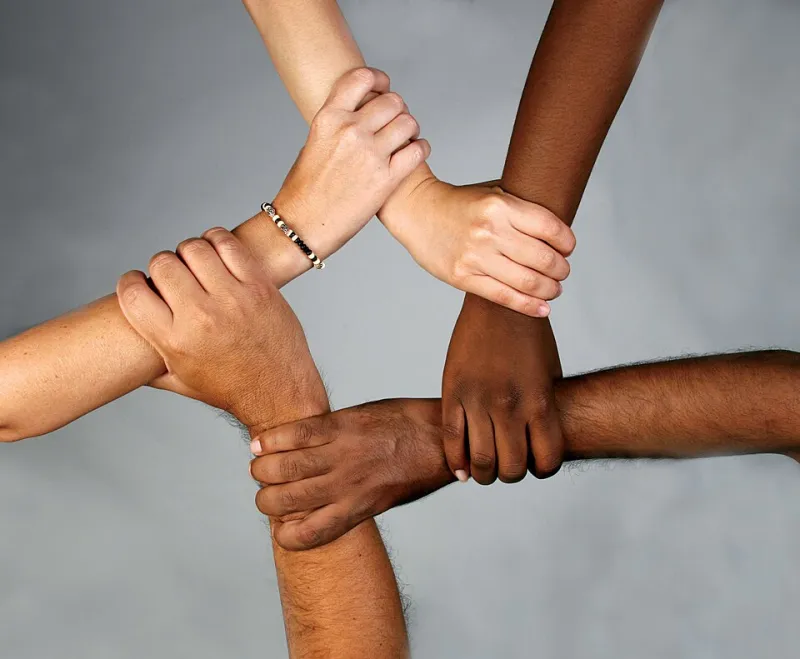
Photo: user Wonder woman0731, CC BY 2.0, via Wikimedia Commons
At some point, you've probably noticed it. The friend who used to share every petition, every rally announcement, every urgent call to action—they've gone quiet. Their social feed moved on to brunch photos and dog content. And if you're the one still posting, still pushing, still trying to build momentum, that silence can feel like a verdict.
It isn't.
What happened to your activist friends almost certainly has nothing to do with whether they still care about the cause. It has everything to do with a communication breakdown that the progressive movement keeps making—over and over again—and rarely stops to examine.
The Preaching-to-the-Choir Problem Is Actually Two Problems
Every organizer has heard the phrase "preaching to the choir." But I'd argue we're actually dealing with something more complicated than that metaphor suggests.
Problem one is the obvious one: activist messaging often reaches only people who already agree. It uses insider vocabulary, references shared grievances, and assumes a level of context that only comes from being deeply embedded in a movement. That's alienating to anyone on the outside looking in.
But problem two is sneakier and more damaging. Even within the choir—even among people who do agree with you—activist messaging frequently fails to give people a clear, low-friction next step. The message creates emotion without direction. People feel the urgency, feel the anger or the sadness or the solidarity, and then... they scroll on. Not because they don't care. Because they genuinely don't know what you're asking them to do.
That combination—messaging that's inaccessible to persuadable outsiders and unclear to sympathetic insiders—is how campaigns stall. It's not apathy. It's a design failure.
Why Your Friends Actually Stopped Sharing
Let's talk about the psychology of what happens when someone who used to be an active sharer goes quiet.
Researchers who study social media behavior and civic engagement have identified a few consistent patterns. One is something called "context collapse fatigue"—the exhaustion that comes from being the person in your social network who constantly posts about heavy, urgent topics. People become aware that their feed is being perceived as relentless or performative, and they pull back to protect their social identity.
Another pattern is what some behavioral scientists call "action paralysis" triggered by scope. When the scale of a problem is emphasized—climate change will affect billions, systemic racism has centuries of history, healthcare failures kill tens of thousands annually—the emotional response is often helplessness rather than motivation. The brain registers a gap between the enormity of the problem and the smallness of what one person can do, and it disengages.
Neither of these is a character flaw. They're predictable psychological responses to the way activist content is frequently framed. And they're fixable.
The Three Audiences You're Actually Talking To
Here's a framework worth stealing. When you're crafting any piece of activist communication—a social post, a petition description, an email to your neighbors—you're actually speaking to three distinct groups at once, and most messaging accidentally optimizes for only one of them.
The Already Converted are your core audience. They know the issue, they share your values, they're ready to act. Good news: you don't need to convince them. Bad news: most activist messaging is written almost entirely for them, using language and framing that only makes sense if you're already in the room.
The Sympathetic but Overwhelmed are the people who broadly agree with you but feel like they don't know enough, don't have enough time, or don't know where to start. This is the largest group. These are your friends who went quiet. They didn't stop caring—they got lost in the complexity and stopped seeing a door they could walk through.
The Genuinely Persuadable are people who haven't formed a strong opinion, or who hold a mix of views that don't map neatly onto political tribes. They're reachable, but not through the emotional language or moral framing that activates your core base. They respond to practical stakes: what does this policy mean for my community, my family, my wallet?
The most effective activist communicators write for the second group first. They use language the third group can hear. And they trust that the first group will come along regardless.
Practical Ways to Redesign Your Message
Okay, so what does this actually look like in practice?
Lead with the specific, not the systemic. Instead of opening with the broader injustice, open with a single story, a single number, a single local impact. "This bill would raise prescription drug costs for 40,000 seniors in our county" lands differently than "Big Pharma is destroying American healthcare."
Name the action before the problem. Most activist content buries the call to action at the end, after several paragraphs of context and urgency. Try flipping it. "Sign the petition below, then keep reading to understand why this matters." Giving people the action first reduces the feeling of being overwhelmed by information before they know what to do with it.
Make the ask embarrassingly small. "Call your senator" sounds simple but is actually a high-friction ask for someone who's never done it. "Click here and we'll dial your senator's office for you—you'll be on hold for less than two minutes" is a different proposition entirely. Lower the barrier until it feels almost too easy.
Cut the jargon, then cut it again. Read your message out loud and flag every word that would confuse your most politically disengaged family member. "Neoliberal," "intersectional," "hegemonic"—these words mean something important to people inside the movement and almost nothing to people outside it. Find the plain-English version.
The People Who Will Actually Act Are Closer Than You Think
Here's the part that tends to surprise organizers when they first hear it: your most persuadable, most actionable audience is usually not the strangers scrolling past your posts. It's the second-degree connections you already have—friends of friends, neighbors who recognize your name but don't know you well, coworkers who've heard you mention the issue once.
Those people are already primed to trust you slightly. They just need a clear, low-stakes invitation that feels like it was written for them, not at them.
The difference between a movement that grows and a movement that stagnates often comes down to whether the people at the edges—the curious, the skeptical, the overwhelmed—can find a door they can actually open.
Your job isn't to make the most passionate case for people who are already passionate. Your job is to build the widest possible on-ramp.
Start with the click that fits your neighbor, not just your activist group. Browse our campaigns at Click the Cause and find the one that even your most checked-out friend could take in sixty seconds flat. That's how movements grow—one low-barrier, well-designed invitation at a time.