Dead Movements Don't Lie: What Kills a Cause (And How to Bring It Back to Life)
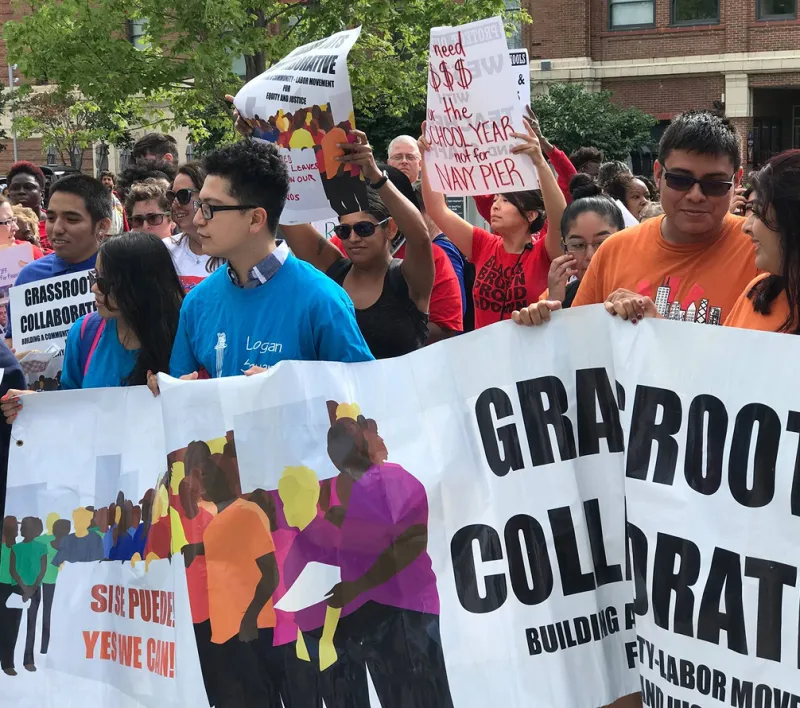
Photo: grassroots activists organizing community meeting with signs and clipboards, via grassrootscollaborative.org
Remember when your whole feed was about a specific issue? The hashtags, the marches, the petitions racking up hundreds of thousands of signatures in 48 hours? And then — nothing. The news moved on, the celebrities stopped posting, and somehow the cause that felt world-changing just... evaporated.
Here's the uncomfortable truth: that cause probably didn't lose. It just had nobody minding the store.
This is one of the most frustrating patterns in American activism. A movement catches fire, generates real energy, and then collapses — not because public support dried up, but because the infrastructure holding it together was never built to survive past the initial surge. Understanding why that happens is the first step to making sure it doesn't happen to the causes you care about.
The Anatomy of a Movement That Fades
Think about the Fight for $15 campaign in its early years. When fast food workers walked off the job in New York City in 2012, it was a genuine grassroots shock to the system. The story was compelling, the stakes were clear, and media coverage was intense. But between the big moments — the strikes, the legislative pushes — there were long stretches where the campaign was essentially invisible to the average person who'd signed a petition or shared a story.
Or consider the surge of activism around net neutrality in 2017. Millions of Americans submitted comments to the FCC. Late-night hosts did segments. Tech companies put up protest banners. And when the FCC voted to repeal the rules anyway, much of that energy simply had nowhere to go. There was no durable organization waiting to channel the anger into a sustained campaign.
These aren't failures of passion. They're failures of architecture.
The Three Structural Gaps That Kill Campaigns
1. No Institutional Home
The most resilient movements in American history — labor rights, civil rights, LGBTQ+ equality — didn't just have passionate supporters. They had organizations: unions, legal funds, advocacy nonprofits, coalitions with paid staff and long-term strategy. When the news cycle turned, those organizations kept the pressure on. They filed lawsuits, lobbied legislators, trained new leaders, and showed up to every boring city council meeting that nobody was live-tweeting.
A lot of modern causes live almost entirely inside social media platforms, which are designed to maximize short-term engagement — not long-term accountability. When the algorithm stops surfacing your issue, your movement effectively goes dark.
2. No Clear Next Step
Momentum is a resource, and like any resource, it needs somewhere to flow. When a campaign peaks and there's no obvious action waiting for newly activated supporters — no voter registration drive, no local chapter to join, no scheduled event — that energy dissipates fast. People who would have stayed involved simply drift away, not because they stopped caring, but because nobody handed them a next step.
3. No Distributed Leadership
Movements that depend on a single charismatic figure or a tight inner circle are one scandal, one burnout, or one career change away from collapse. The causes that survive are the ones that deliberately build bench depth — identifying and training new leaders at the local level, so the movement can function even when the most visible faces step back.
Case Study: The Gun Violence Prevention Movement's Long Game
After the 2018 Parkland shooting, something different happened compared to previous waves of gun violence activism. The student organizers behind March For Our Lives didn't just plan a rally — they built an organization with chapters across the country, registered tens of thousands of new voters, and explicitly focused on down-ballot races in state legislatures. They understood, at a remarkably young age, that the fight wasn't going to be won in a single news cycle.
That structural thinking paid off. The organization is still active, still running campaigns, and still showing up in states where gun legislation is being debated — years after the initial surge of media attention faded.
The lesson isn't that every movement needs to become a full nonprofit overnight. It's that the activists who build something — even a modest, distributed network — outlast the ones who rely purely on viral moments.
A Practical Framework for Activists Who Want Their Cause to Last
If you're working on a campaign right now, or trying to revive one that's gone quiet, here's where to start:
Map your infrastructure honestly. Ask yourself: if the three most active people in this campaign disappeared tomorrow, would anything continue? If the answer is no, you have a single point of failure problem. Start fixing it by documenting your processes, sharing access to your tools and contact lists, and identifying who else could step into a leadership role.
Create a between-moments plan. Every campaign has peaks — a vote, an anniversary, a news hook. But what happens in the quiet stretches? Build a calendar of low-lift actions that keep your community engaged even when there's nothing dramatic happening. Monthly email updates, local meetups, letter-writing sessions — these aren't glamorous, but they keep people tethered.
Invest in local nodes. National campaigns feel powerful, but local chapters are what give a movement staying power. Connect your supporters to city council meetings, state legislative sessions, and community organizations that are working on related issues. Local action is harder to ignore and harder to kill.
Celebrate the small wins loudly. One reason movements fade is that supporters don't see evidence that their participation matters. Make a point of communicating every incremental win — a bill that advanced in committee, a policy that changed at the city level, a legislator who shifted their position. These moments remind people that the work is working.
Build relationships with allied organizations. You don't have to build everything from scratch. Partner with established groups that share your values, share your mailing lists with complementary campaigns, and show up to support other causes when they need it. Coalition-building is how small campaigns punch above their weight.
Resurrection Is Possible — But It Requires Honesty
If your cause has already gone quiet, the first step to reviving it is an honest autopsy. Why did it fade? Was it a lack of funding, a leadership vacuum, a tactical misstep, or just the relentless churn of the news cycle? You can't fix a structural problem without naming it.
The good news is that public support for most causes doesn't actually disappear — it just goes dormant. People who signed a petition two years ago and never heard back are still, in many cases, persuadable. A well-crafted re-engagement email, a new local hook, or a fresh moment of relevance can reactivate a surprisingly large chunk of a dormant list.
The cause graveyard isn't a permanent address. It's a waiting room — and the difference between a movement that stays buried and one that comes roaring back is almost always whether someone decided to do the unsexy, structural, long-haul work of keeping it alive.
That someone could be you. Click the cause. Build the thing. Make it last.