Three Minutes at the Mic: How to Survive (and Win) Your First City Council Meeting
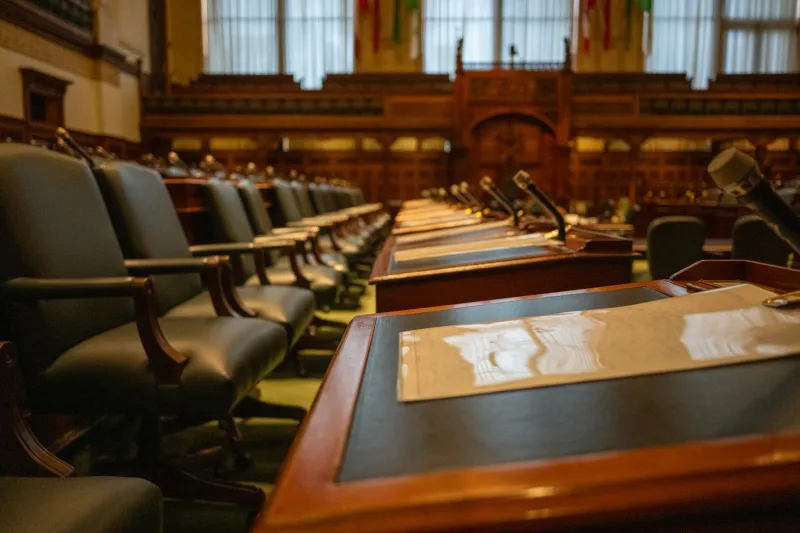
Let's be honest: nobody dreams of spending a Tuesday night in a wood-paneled chamber watching five people in blazers approve a sewer easement. But here's the thing most people never learn — that boring room is where the decisions actually get made. The zoning variance, the police budget, the housing development, the crosswalk by your kid's school. All of it happens there, often in front of an audience of exactly zero residents.
That's not apathy you're exploiting when you show up. That's opportunity.
What You're Actually Walking Into
City council, county commission, school board, planning commission — the names vary but the structure is remarkably similar across the US. There's an agenda, usually published online 48 to 72 hours before the meeting. Read it. Seriously, read it. It tells you exactly what's being voted on and when it comes up.
Meetings typically follow this rhythm: a call to order, some approvals of past minutes, old business, new business, and then — the part you care about — public comment. Some cities put public comment at the beginning, which is great. Others stick it at the end, which means you might be sitting through two hours of stormwater drainage discussion before your turn. Bring a book. Bring a snack. Bring patience.
Pro move: check if your city posts agendas with item numbers and estimated times. If your issue is item 7, you can often slip in late instead of arriving at 6 p.m. sharp.
The Three-Minute Rule (And Why It Matters More Than You Think)
Most public comment periods give you two to three minutes. Sounds like nothing, right? Here's what changes the math: most people who show up to comment are unprepared, rambling, or both. A tight, specific, three-minute statement stands out like a lighthouse.
Council members also take notes. In many jurisdictions, a single well-argued comment gets read into the record — and the record matters. If a proposal gets challenged legally or politically later, the minutes are the evidence. Your words become part of the official story.
Your Script, Ready to Steal
You don't need to be a natural speaker. You need a structure. Here's the classic three-part formula:
1. Who you are and why you're here (20 seconds). "Hi, I'm Maria Torres, I live on Elm Street, and I'm here about agenda item 9, the proposed development at Fifth and Main."
2. One concrete fact plus one human stake (90 seconds). This is where most people blow it. Don't list ten complaints. Pick your strongest verifiable point — a statistic, a code citation, a report — and pair it with what it means for real people. "The traffic study projects 400 additional car trips a day on a street where kids already wait for a school bus with no sidewalk."
3. The ask (30 seconds). Be specific. "I'm asking the council to table this vote until an independent traffic study is done." Vague requests get vague responses. "Please do the right thing" gets you nothing. "Vote no on item 9" or "delay the vote until X" gets you a measurable outcome you can track.
Practice it out loud once. Time yourself. Nervous is fine — the microphone doesn't care, and neither does anyone else. Everyone in that room gave their first comment once.
Etiquette That Buys You Credibility
- Address the body, not individuals. "Members of the council" — not "Councilwoman Diaz, how dare you." It's a formal proceeding, and playing by the rules signals you're serious.
- Don't clap, boo, or cheer from the audience, even when you agree. Some chairs will clear the room for it. It also hands your opponents an easy excuse to dismiss the whole comment period.
- Sign the speaker card if there is one. Many cities require it. Show up early enough to fill it out.
- Bring printed copies of your statement for the clerk. It often gets attached to the official record verbatim.
- Follow up in writing. A short email to all council members the next day, restating your ask, doubles your impact.
Proof It Works: The People Who Just Showed Up
This isn't a civics-class fairy tale. In 2021, residents of Charlottesville, Virginia packed council meetings until the city removed the downtown Confederate statues — a fight that lived or died in those chambers for years. In towns across Texas and California, school board meetings became the decisive battleground over book policies and curriculum, with a handful of organized parents at the mic shifting outcomes that drew national attention.
And it works at the smallest scale too. Neighborhood associations across the country have flipped zoning votes, saved community gardens, and forced crosswalk installations — not with money or lawyers, but with twelve residents who each took their three minutes, week after week, until the council ran out of reasons to say no.
The pattern is always the same: one meeting feels pointless. Three meetings starts a rhythm. Six meetings and you're a recognized voice the council has to account for.
Your First-Meeting Checklist
- Find your city or county's website and locate the next meeting date and agenda.
- Skim the agenda for anything touching your issue — or pick one item and learn it.
- Write your three-part statement and time it.
- Show up 15 minutes early, sign in, and grab a seat near the front (it signals confidence).
- Say your piece, thank the council, and email your statement afterward.
- Come back next time. That's the whole secret.
Congress is on C-SPAN. The president is on every screen in America. But the vote on your rent stabilization ordinance, your library budget, your local wage law? That happens in a room with folding chairs, and the only people watching are the ones who showed up.
Three minutes at the mic. One Tuesday night. That's the whole ask. Take it.