The Line Item That Runs Your Life: Why That Weird Referendum at the Bottom of Your Ballot Deserves 15 Minutes
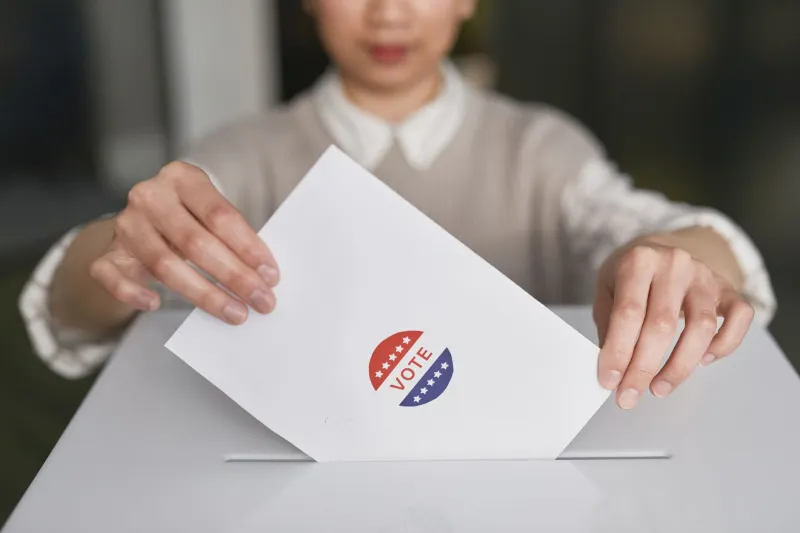
Somewhere in America right now, a county commission is drafting a ballot question so boring-sounding that most voters will skip it entirely. Something like 'Measure C: Authorizing the Issuance of General Obligation Bonds.' Riveting stuff, right?
Except that measure might fund the new elementary school your kid attends. Or the flood control project that keeps your basement dry. Or the jail expansion that will shape your county's budget for the next 30 years.
And here's the kicker: in a low-turnout odd-year election, fewer than 20% of eligible voters might weigh in on it. Your single vote isn't a drop in the ocean there. It's a boulder in a kiddie pool.
The Math Nobody Talks About
We've been trained to think of voting as a presidential ritual — show up every four years, pull the big lever, feel patriotic. But the decisions that actually touch your daily existence? Those happen down-ballot, in elections where turnout is so thin that a motivated neighborhood group can swing the result.
A school board seat in a suburban district has been decided by fewer than 40 votes. A millage renewal for a rural fire department passed by 11. Eleven. Your group chat probably has more people in it.
This is the quiet secret of American politics: power concentrates where attention doesn't. The fewer people watching, the more your click counts.
Case Study: One Measure, One County, One Wild Ride
Take the story of a library levy in a mid-sized Midwest county — the kind of measure that got zero TV ads and one paragraph in the local paper. The levy funded three branches, and without it, two would close.
The opposition? A small but organized group of property-tax protesters who showed up to every forum and dominated the comment sections of local Facebook groups. Supporters assumed the vote would take care of itself. It almost didn't — the measure squeaked through by under 2%.
What flipped it? A handful of librarians and volunteers who spent the final two weeks doing something radical and simple: they texted personal reminders to everyone they knew, with a one-sentence explanation of what the levy funded. No graphics. No slogans. Just 'hey, this is on your ballot, and here's what it pays for.'
That's it. That's the whole playbook. Information beats inertia every single time.
Your 15-Minute Ballot Research Routine
You don't need a political science degree. You need a timer and a little curiosity. Here's the exact routine:
Minutes 1–3: Find your actual ballot. Go to your state or county election office website (or a nonpartisan tool like Ballotpedia or Vote411) and pull up your sample ballot. Not the news coverage — your ballot, with your races.
Minutes 4–8: Read the measure language — yes, the actual legalese. Ballot questions are written in deliberately dense language, but the first and last sentences usually tell you what it does and what it costs. Note any phrase like 'shall levy,' 'authorize,' or 'prohibit.' Those are the load-bearing words.
Minutes 9–12: Follow the money. Who filed for and against? Your state's campaign finance database (or the local news) will show you. If the opposition is funded by a single developer or a national PAC, that tells you something. If supporters are teachers and firefighters, that tells you something too.
Minutes 13–15: Check one trusted local source. Your city's alternative weekly, public radio station, or League of Women Voters chapter often publishes plain-English guides. One read-through and you're done.
Fifteen minutes. That's the entire cost of being the most informed person at your polling place.
Turn Your Research Into a Ripple
Here's where it gets fun — and where Click the Cause readers shine. Once you've done your 15 minutes, don't sit on it.
- Make a cheat sheet. A simple text or photo of your ballot with your picks and a one-line reason for each measure. Send it to five people who trust you.
- Host a 20-minute 'ballot party.' Coffee, laptops, sample ballots. People aren't lazy — they're overwhelmed. Remove the overwhelm and they show up.
- Drop the knowledge where people already are. The group chat, the book club, the parents' thread. Not a lecture — just 'hey, did you see Measure 4? Here's the deal in two sentences.'
The Power Was Never in the Volume
We've been sold the idea that political influence means shouting the loudest or reaching the most people. But a thousand shares of a national outrage post change nothing in your county's budget. One informed vote on a local referendum — replicated across a few hundred friends and neighbors — can reroute millions of dollars.
The system counts clicks at the ballot box more than clicks on the timeline. This election, make yours count where the odds are best and the stakes are closest to home.
The weird line at the bottom of your ballot? That's not the small stuff. That's the whole game.